Benefactours

World Safari and Volunteer Adventures

Call 1-604-685-0555

  • Home
  • About
    • About Us
    • Why BenefacTours
  • Destinations
    • Design Your Own Tour
    • Private Tours
    • Group Tours
  • Blog
  • Travel Resources
    • BenefacTours FAQ
    • Travel Consulting
    • Your Security
    • Booking Conditions
  • BenefacTours Testimonials
  • Contact

Serengeti National Park

September 29, 2020 By Cynthia Holmes Leave a Comment

serengeti great migration

About Serengeti National Park

A World Heritage Site, Serengeti National Park is undoubtedly one of the most famous wildlife sanctuaries in the world. Covering an area of 14,763 sq km, it is the largest national park in Tanzania.

The Great Migration

The phenomenal display of The Great Migration occurs annually, when 2 million wildebeests, zebras and gazelles begin migrating in the Ngorongoro Conservation Area of the southern Serengeti in Tanzania and loop through the Serengeti National Park and north towards the Masai Mara reserve in Kenya. This event is a natural phenomenon determined by the availability of grazing.

Between May and July, when drought sets in, Serengeti is the site of one of the most breathtaking events in the animal kingdom – the migration of thousands of wildebeest heading southwest, north or west in search of water and greener pastures. The Lobo area remains rich in wildlife during the dry months of August to November when most of the game has moved from the grass plains in the south. This is also true of the Western Corridor towards Lake Victoria when the migration usually lingers in the area between June and July.

Serengeti provides sanctuary to the highest concentration of plains animals in the world. Survey estimates indicate an animal population of over 4 million including 3,000 lions, 1,600,000 wildebeest, 300,000 Thomson‘s and Grant‘s gazelle, 500,000 zebras, not to mention over 400 species of birds in the Serengeti.

Crossing the great plains of The Serengeti allow you a chance to spy all big 5 – lion, leopard, elephant, rhino and buffalo as well as giraffe, wildebeest, zebra, warthog, topi, hartebeest, impala, Thompson’s and Grant’s gazelles, hyenas, jackals, serval, caracal, baboon, large cobras, monkey, eland, bushbuck, dik-dik, waterbuck, reedbuck, hippos, crocodiles, Patas monkey, turaco, antelope, oribi, grey bush duiker, black-and-white colobus, flamingos, Kori bustard, secretary bird, ostrich, and much more.

Click here for Tanzania Safaris

Filed Under: Featured, Blog, Africa

Travel Safely

July 2, 2020 By Cynthia Holmes Leave a Comment

Exodus Dolomites

As we all await the opening of more borders, you wonder about how to travel safely during and after Covid-19. Now is a good time to plan those bucket list trips like safaris, epic treks or small ship cruising. People are starting to book tours again for the end of this year, 2021 and 2022.

How To Travel Safely

Airlines and small group tour companies are constantly adapting to new safety measures to allow you to book with confidence. As a result, local guides are being trained on new procedures as well. Likewise, cancellation policies are being adapted with rebooking up to end of 2021 or 2 years hence. Here is an example from G Adventures:
“For a limited time, tours departing before Dec. 31, 2020 can be cancelled and rebooked up to 14 days prior to departure and those departing between Jan. 1st 2021 and July 31, 2021 can be cancelled and rebooked up to 30 days prior to departure. Terms and conditions apply.”

If you are wanting to get going sooner than later, consider these options to allow you to feel safe as you travel. Time to get dreaming and scheming.

1. Smaller is Better

Think small! The smaller the group. the safer you may feel. Small group tour companies are revamping tours to accommodate new safety protocols. This means that hotels, restaurants, and means of transport are all being adapted. For example, G Adventures, one of our vendors, has implemented new health and safety measures on all of their tours.

In addition to that, they have created a collection of 37 new tours branded “Plus”. These 37 PLUS tours have added steps that go that extra, physically distanced mile. These tours are scheduled to run starting this October and will continue until the end of 2021.

– Group size is reduced to maximum 12 passengers (average 8 – 10)
– Private vehicles  will be used exclusively (except for airplanes),
– Seating  – seats will be assigned each day while traveling and vehicles are thoroughly cleaned each evening
– My Own Room- Double or single rooms only will be assigned (no multishare) or if a traveller wants their own room, they can request “My Own Room” at half price. They will also get extra leg room on vehicles as no-one will be seated next to them.

2. Self-guided tours

Self guided walking or cycling tours are a great way to stay socially distanced while exploring a country. Move at your own pace.  Stop to take in a view or make a side trip. Linger over lunch or depart earlier than usual. Luggage is transferred and everything is arranged beforehand with 24/7 support. Exodus Travels is the world’s leading walking and hiking tour specialists, operating for 46 years. They are another awesome vendor for our clients.

3. Customize Your Own

Create your own tour, with your family or group of friends. You set your own travel dates, choose a group of 2 or more people, design action packed or leisurely pace, all to suit your interests and budget. Enjoy private local guides for your entire trip as well as a private vehicle and driver.

Classic Kenya Safari – Encounter the abundance of wildlife on your first game drive while  gazing at the snows of Mount Kilimanjaro. Seek out the thrilling big five – elephant, rhino, buffalo, leopard and lions on your unforgettable Kenya wildlife safari.  Options are to add on days or other game parks.  Also consider gorilla tracking in Uganda, camping in The Okavango Delta, viewing the power of Victoria Falls or sipping wine in Capetown. Other Wildlife Safaris with BenefacTours.

Annapurna Trek – Absorb the glorious views of the Nepalese countryside on this Annapurna Trek. Explore the greater Himalayan landscapes of northern Nepal, observing the Gurung, Magar and Manangi tribes and their lifestyles.  Other Trekking Tours in Nepal, Kenya, Tanzania, and South America with BenefacTours.

Other ideas for tailor made adventures – Galapagos small ship cruising, explore the diverse eco-systems of Costa Rica, cycle from Vienna to Budapest, conquer Mont Blanc. Certainly you can come up with your own ideas of a dream holiday.

Filed Under: Blog, Safety, Featured

Air Canada’s Covid Safety

June 5, 2020 By Cynthia Holmes Leave a Comment

Air Canada

Air Canada Covid Safety Guidelines

You can fly confidently, knowing Air Canada’s Covid Safety measures are in your best interest. They include HEPA filtration systems that capture 99.9% of airborne particles, and continually refresh cabin air. All high-touch areas are sanitized with a hospital-grade disinfectant before every flight and each time an aircraft overnights it receives a thorough cleaning.

Additional preventive measures like blocking the adjacent seat in Economy Class, mandatory face coverings, and adjusted on board service are also in place to better protect customers and employees. Seat buckles, over head bin handles, light switches and controls, armrests and are sanitized regularly between flights.

More about Air Canada’s Clean Care here.

Prior to your flight:

Here are some tips in a nutshell as of today 5th June 2020. See the website for complete details.

  • Confirm eligibility – if you are sick with a cough or temperature, you will not be able to travel
  • Baggage – Pack minimal for carry-on
  • Check in – Options for online or self service counters, and touch free bag check (at select airports). Use a face mask at the airport. Use credit or debit cards for payments at airport or on the aircraft.
  • Boarding – You will be asked health questions prior to boarding. Remain seated until your zone is called. Scan your own boarding card.
  • On board – Cabin grooming augmented. Customer care kits provided with masks, gloves, hand sanitizer, etc. No pillows or blankets with be offered. Bar service will be bottled water only. Boxed meals will be served on international flights or in business class on flights over 2 hours. No duty-free service will be offered on planes. For now, no adjacent seats are assigned.
  • Deplaning – Remain distanced.

People are starting to book for the end of this year and next spring and summer already. Knowing that you can breathe easy about safety measures ensures a relaxed and enjoyable flight experience.  For more detailed and up to date travel guidelines, see Air Canada’s Covid page.


Filed Under: Featured, Blog, Safety

About Masai Mara

June 3, 2020 By Cynthia Holmes Leave a Comment

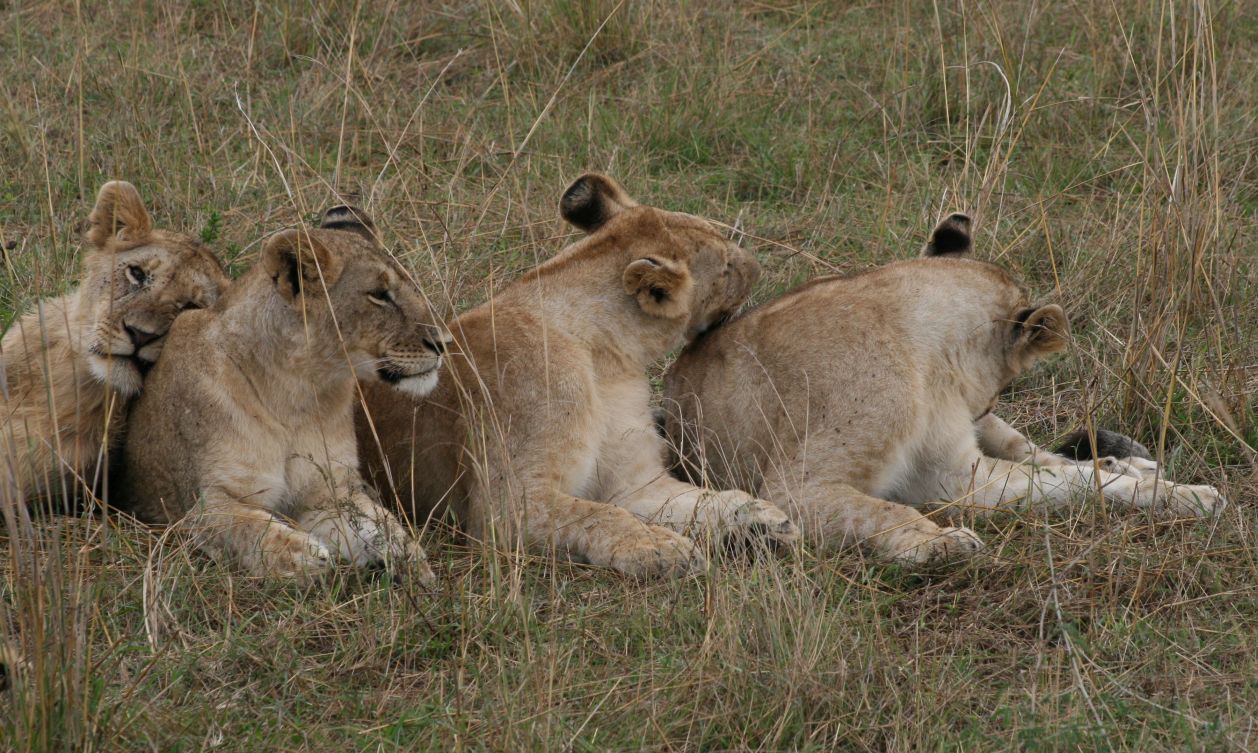
Masai Mara family of lions
Masai Mara lions

Kenya’s Masai Mara National Reserve is the perfect wildlife sanctuary with expansive savannah and unmatched wildlife. The greatest animal spectacle in the world is The Great Wildebeest Migration. It occurs every year when more than 2 million animals migrate from the adjoining Serengeti. July through October are typically the best times to witness the migration.

Wildlife

Besides the numerous zebras, wildebeests, and gazelles, elephants, buffaloes and hippos exist in large numbers. Lions are found in large prides everywhere in The Masai Mara. Leopards and cheetahs are less visible, but still fairly common. Thomson’s gazelle and Grant’s gazelle are the most prevalent of the antelopes, as well as large numbers of impala and topi.

The park hosts all of the big five (rhino, lion, leopard, buffalo and elephant) including the rare and elusive black rhino. Other wildlife to be found in the reserve are impala, giraffe, topi,  jackals, hyena, bat-eared fox,  450 species of birds including Verreaux’s eagle owl, ostrich, kori bustard, martial eagle and more.

People

Masai tribes people live peacefully in and around the park. Traditionally nomadic, Masai can be found herding cattle and goats. These days many Masai villages welcome visitors and take pride in explaining their way of life.

Safaris

Kenya safaris are customizable, and typically designed for 2 or more people. Masai (Maasai) Mara can be visited on safari from Nairobi. It is possible to fly from Nairobi, although most safaris include travel by road. Most safaris include other game parks as well.

Kenya Safaris here.


Filed Under: Featured, Blog, Africa

About Galapagos Islands

March 30, 2020 By Cynthia Holmes Leave a Comment

giant tortoise Galapagos

About Galapagos Islands

Considered one of the world’s preeminent destinations for wildlife viewing are The Galápagos Islands. Straddling the equator, this volcanic archipelago is a province of Ecuador and lies about 1,000 km off its coast in the Pacific Ocean.

The terrain harbors a diversity of plant and animal species. Known for their variety of local species, the islands were visited by Charles Darwin 1835. His study of Galápagos’ endemic species later inspired his theory of evolution and natural selection.

The Galápagos Islands and their surrounding waters form the Galápagos National Park. The principal language on the islands is Spanish. The islands have a population of slightly over 25,000.

Wildlife

One of the best-known is the Galápagos tortoise, which lives on seven of the islands. It has an average lifespan of more than 150 years. The marine iguana is also extremely unusual, since it is the only iguana adapted to life in the sea. Land iguanas, lava lizards, geckos and harmless snakes can also be found in the islands.

Around 56 species of birds live in the archipelago, of which 27 are found only in the Galápagos. The most outstanding are penguins, which live on the colder coasts, Darwin’s finches, frigatebirds, albatrosses, gulls, boobies, pelicans and Galápagos hawks, among others. The flightless cormorant, a peculiar bird which has lost the ability to fly, and the Galapagos crake, nearly flightless, are also part of this rich fauna.

Exotic fish, rays, sea lions, sea turtles, octopus, Hammerhead Sharks, Galapagos Bullhead Shark as well as other species of shark are prolific in the sparkling waters of the islands.

Tourism

A variety of cruises exist to tour you around the islands, from small sailboats carrying 6 passengers to ships catering to 100 passengers. In addition, cruises utilize yachts of varying degrees of comfort, from budget to luxury. A cruise will take you from island to island, exploring the terra firma as well as allowing you to snorkel in the crystal blue deep waters. You will discover amazing aquatic and birdlife in just a few days of exploration.

Since a few of the islands are inhabited, Santa Cruz, San Cristobal, Isabela, and Floreana, you have the opportunity to stay on land. Spending a few days on one of these islands allows you to take day trips to nearby islands to hike, kayak and snorkel or dive. There are a selection of specialized yachts meant for diving the Galapagos. These are specially equipped for divers and will allow you to explore many regions of the Galapagos Islands.

Contact us for information on tours or see a selection of Galapagos tours here.

Major Islands

There are 18 main islands in the Galapagos archipelago, and here are some of the highlights.

  • Santa Cruz Island

    This island hosts the largest human population in the archipelago. The Charles Darwin Research Station and the headquarters of the Galápagos National Park Service are located here. The Highlands of Santa Cruz offer exuberant flora, and are famous for the lava tunnels. Large tortoise populations are found here as well as sea turtles, rays and small sharks.

·         Bartolomé

Bartolomé is a small island just east of Santiago is best known for Pinnacle Rock, the stark remains of an eroded tuff cone that juts like a large sail out into Bartolomé’s northern bay and which is easily one of the most familiar landmarks of the archipelago.

·         Española

The most southerly island in the archipelago, dramatic Española is also one of the oldest and breathtaking. It plays host to several unique species and sub-species and is a great Galapagos environmental success story.

·         Fernandina

The third largest, youngest and westernmost of the islands that form the Galapagos archipelago, Fernandina’s 642 m2 is mostly barren black lava with La Cumbre Volcano dominating the landscape. Its massive domed cone continues to grumble, erupting on average every five years making Fernandina, alongside neighboring Isabela, one of the most volcanically active of the islands.

·         Floreana

Several curiosities are associated with Floreana, the sixth largest island in the archipelago, not least the whiff of scandal and intrigue that surrounds three groups of German settlers who arrived on the island in the 1930’s and that, one by one, mysteriously began to die or disappear.

·         Genovesa

The horseshoe shaped island of Genovesa is one of the youngest in the archipelago, being a mere one million years old. As it is the only island north of the equator that allows visitors, this makes it an even more special destination.

·         Isabela

By far the largest island in the archipelago at 4,588 km2 and measuring 130 km north to south and 70 km at its widest point and occupying over 58% of the Galapagos’ entire land mass.

Weather

Although the islands are located on the equator, the Humboldt Current brings cold water to them, causing frequent drizzles during most of the year.

From June to November the temperature by the sea is 22 °C. A steady and cold wind blows from south and southeast, frequent drizzles last most of the day, and dense fog conceals the islands.  From December to May, during the warm season, the average sea and air temperature rises to 25 °C . Normally, there is no wind, though there can be sporadic rain to accompany the sunshine.


Filed Under: Featured, Blog, South America

About Mount Kilimanjaro

March 19, 2020 By Cynthia Holmes Leave a Comment

trekking mt kilimanjaro

About Mount Kilimanjaro

Looming over the town of Moshi in northern Tanzania, Mount Kilimanjaro rises from the dry plains, through a wide belt of forest and high alpine heath to an almost bare desert and finally the snow-capped summit, Uhuru Peak. At just 3 degrees south of the Equator it is one of the world’s highest free standing mountains. Mt. Kilimanjaro is composed of three extinct volcanoes: Kibo 5895 m (19340 ft.), Mawenzi 5149 m (16896 ft.), and Shira 3962 m (13000 ft.). Almost every kind of ecological system is found on the mountain: cultivated land, rain forest, heath, moorland, alpine desert and an arctic summit.

“As wide as all the world, great, high and unbelievably white in the sun was the square top of Mount Kilimanjaro”, wrote Ernest Hemingway of this highest mountain in Africa rising to 5,895 metres above sea level.

Routes

A climb on Africa’s highest mountain leads you through magnificent forest terrain. The ascent of Kilimanjaro can be done from six routes: Mweka, Umbwe, Shira, Rongai, Machame, and the Marangu Route which is the easier and the most popular. Depending on which route one wants to use, the climb of Kilimanjaro can take between four nights to six nights on the mountain. The two most popular routes are Marangu and Machame. On the Marangu Route, accommodation is in alpine huts while on Machame Route it is camping throughout. While expert guides and porters will accompany you on your climb, no technical equipment is required.

Weather

Snowfall can occur at any time of year but is mostly associated with northern Tanzania’s two rainy seasons. Precipitation in the summit area occurs principally as snow and graupel of 250 to 500 mm (9.8 to 19.7 in) per year and ablates within days or years.

The two rainy seasons last from March to May and another around the month of November. The northern slopes receive much less rainfall than the southern ones. The lower southern slope receives 800 to 900 mm (31 to 35 in) annually, rising to 1,500 to 2,000 mm (59 to 79 in) at 1,500 metres (4,900 ft) altitude and peaking “partly over” 3,000 mm (120 in) in the forest belt at 2,000 to 2,300 metres (6,600 to 7,500 ft). In the alpine zone, annual precipitation decreases to 200 mm (7.9 in).

The average temperature in the summit area is approximately −7 °C (19 °F). Nighttime surface temperatures on the Northern Ice Field (NIF) fall on average to −9 °C (16 °F) with an average daytime high of −4 °C (25 °F). It is possible for the NIF to cool to as low as −15 to −27 °C (5 to −17 °F).

Wildlife

Large animals are rare on Kilimanjaro and are more frequent in the forests and lower parts of the mountain. Elephants and Cape buffaloes are among the animals that can be potentially hazardous to trekkers. Bushbucks, chameleons, dik-diks, duikers, mongooses, sunbirds, and warthogs have also been reported. Zebras, leopards and hyenas have been observed sporadically on the Shira plateau. Specific species associated with the mountain include the Kilimanjaro shrew and the chameleon Kinyongia tavetana. There are several stupendous game parks in Tanzania and nearby Kenya.

Amboseli National Park

Amboseli, one of the oldest national parks across the border in Kenya. It is located at the foot of Mount Kilimanjaro. The park is famous for its tranquil beauty and easily approachable animals, where the snows of Mount Kilimanjaro form a majestic backdrop to one of Kenya’s most spectacular displays of wildlife.

Due to the open nature of the park, lions are easily spotted, and can occasionally be watched stalking their prey. Zebra, giraffe and gazelles abound.  The elephant population of 1500 is one of the longest studied and best researched.  Buffalo, leopard, cheetah, wildebeests, hyenas, jackals, warthogs, and baboons are all present here.

All Kilimanjaro trekking routes

High Altitude Climbing and Altitude Sickness

Filed Under: Featured, Blog, Africa

  • « Previous Page
  • 1
  • 2
  • 3
  • 4
  • …
  • 8
  • Next Page »
Have questions or can’t find what you are looking for? We’re happy to help. Ask your question below.

    Your Name (required)

    Your Email (required)

    Subject

    [your-subject]

    Your Message

    Please Enter Code
    captcha  

    Your Tour Guide

    Cynthia Holmes
    Traveller / Owner
    Send an Email
    Tel: 1 (604) 685-0555

    Recent Posts

    • Why Travelers Are Flocking To Africa
    • Lose Yourself At Lewa Conservancy, Kenya
    • Chitwan National Park
    • Visit Alicante Spain
    • Need To Know To Book A Safari
    • Covid 19 Safety Protocols
    • Offset Carbon When Travelling
    • Sitemap
    • Contact
    • Booking Conditions
    • BenefacTours FAQ
    • Privacy Policy

    Copyright © 2026 BenefacTours Inc. 1489 Harold Rd. North Vancouver, BC, V7J 1X2 Canada

    Telephone Local: 1-604-685-0555 Toll Free Canada: 1-877-687-0555 Skype: benefactours

    Hours: Monday – Friday 8 am – 5 pm PST, Saturday 9 am – 4 pm PST