Benefactours

World Safari and Volunteer Adventures

Call 1-604-685-0555

  • Home
  • About
    • About Us
    • Why BenefacTours
  • Destinations
    • Design Your Own Tour
    • Private Tours
    • Group Tours
  • Blog
  • Travel Resources
    • BenefacTours FAQ
    • Travel Consulting
    • Your Security
    • Booking Conditions
  • BenefacTours Testimonials
  • Contact

Northern White Rhino Almost Extinct

October 21, 2014 By Cynthia Holmes

Big 5 Safari TanzaniaAnother rhino species, the Northern White Rhino is almost extinct and only 6 remain on the planet.  Kenya’s Suni, a male northern white rhino, from Ol Pejeta Conservancy, has died. This leaves only 6, with only 1 of them being male.

Poachers are killing rhinos of all species at an alarming rate. During the past few years, the Western Black Rhinoceros became extinct.   These majestic animals are killed for their horn, which is made of keratin, the same stuff that comprises your finger nails.  Traditional Asian medicine touts powdered rhino horn as an aphrodisiac and medicine for other ailments.

There are 5 sub-species of rhinoceros – black and white rhinos in Africa, and Indian, Javan and Sumatran in Asia.  There are only a few dozen of the latter 2 species remaining, and only a few thousand of the other 3. A century ago, there were 500,000 rhinos across Africa and Asia.  The decline in numbers is due to greed and nothing else.

Kruger National Park has just arrested 14 people for poaching in their world renowned game park a few days ago. The good news is that poachers are getting caught, and tossed into jail.  Kenya is making strides in tracking poachers using drones and dogs, among other techniques. The bad news is that poaching continues.

What can you do? Follow organizations like International Rhino Foundation or Save the Rhino, share in social media, march in rallies to raise awareness and support conservancies if you can.

Filed Under: Uncategorized, Blog

Altitude Sickness

October 3, 2014 By Cynthia Holmes

Altitude SicknessHigh Altitude and Altitude Sickness:
High Altitude climbing may bring on altitude sickness, the reaction of the body adjusting to decreasing amounts of oxygen. Normally, the higher the altitude, the less oxygen available for the body to carry on normal functions.  Altitude sickness most commonly occurs from above 2,800 metres (9,200 ft) but this is different for everyone.

There is simply no way of knowing your own susceptibility prior to being at altitude thus it is vital you monitor your own health. Symptoms may be mild and subside/go away after a day’s rest, or if it is ignored it could lead to death. If the body is unable to adjust to altitude these symptoms will persist and, if they are left untreated, altitude sickness may progress to High Altitude Cerebral Edema (HACE) or High Altitude Pulmonary Edema (HAPE). Both can be fatal if ignored. More on HACE and HAPE.

Symptoms:

  • Headache
  • Loss of appetite
  • Disturbed sleep or drowsiness
  • Irritability
  • Fatigue
  • Nausea/vomiting
  • Dizziness
  • Swelling of hands, feet & face

Avoid Altitude Sickness:

  • Avoiding alcohol, tobacco and substances that can interfere with good delivery of oxygen to the body or cause dehydration.
  • Eating small, frequent meals high in carbohydrates.
  • Drinking plenty of water – at least 4 litres per day
  • Taking it easy or have a rest. Walk at a slower pace than you would at sea level and avoid overexertion.
  • Check with your health care provider to see if Diamox would be appropriate for you to take while climbing. See below.
  • If possible, don’t fly or drive to high altitude. Start below 10,000 feet (3,048 meters) and walk up. If you do fly or drive, do not over-exert yourself or move higher for the first 24 hours.
  • Hike high and sleep low. You can climb more than 1,640 feet (500 meters) in a day as long as you come back down and sleep at a lower altitude.

Read more about High Altitude Climbing and Altitude Sickness.


Filed Under: Uncategorized, Blog

Responsible Volunteerism

September 18, 2014 By Cynthia Holmes

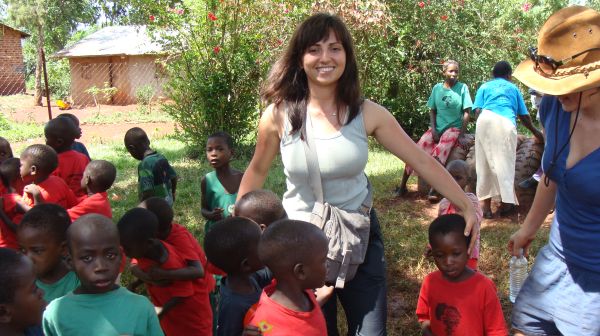
how to be a respnsible volunteerHow to be a Responsible Volunteer – Responsible volunteerism in East Africa is a great way to create positive impact through your travels. You have the privilege of building lasting relationships within the local community, and being instrumental in the mobilization of community members to be proactive and bring about lasting change. The purpose of Africa volunteer work is to create positive change with members of the local community, not to or for.

You will return home enriched, refreshed, and with a greater sense for global community. Your memories will last a lifetime.

Here are some general guidelines on responsible volunteerism:

  • Research and respect the local culture and history
  • Avoid over-consumption and waste
  • Use local resources sustainably
  • Focus on the Assets of the local community and its members first, and address Needs second
  • Encourage and maintain social, economic, cultural, and natural diversity
  • Empower members of the local community in all aspects of planning and decision-making
  • Avoid paternalism – listen to and communicate with members of the local community on equal grounds, and focus on sustainable impact that can be continued by community members once you leave.

Responsible volunteer work in Africa and her diverse countries is paramount to creating lasting, positive change in local communities. Get to know the local culture and people, enjoy building relationships, and engage in active learning and work alongside local community members. When it’s time for you to leave, you can be confident knowing your efforts will continue after you’ve left, and you’ll have the memories of a lifetime.

Here are some comments from past volunteers:

My volunteering experience in Uganda was a beautiful gift I will cherish always. I have Cynthia to thank for guiding me on this incredible journey with grace, humour and integrity.
Christie Dart
Calgary, Canada

Volunteering at the orphanage was an amazing, rewarding experience and I would do it again in a heartbeat. The sisters also helped to make the experience a special one; they were so kind to me and they went out of their way to make me feel at home. I will never forget my experience.  I really can’t thank you enough for all your patience, support and help regarding my visit to Uganda. It was such a comfort knowing that if I had an issue I could email or call you and receive a speedy response. You really go above and beyond!
Yvette Andrizzi
Northridge, CA, USA

You cannot believe how happy I am for doing this, though was too short.  Everything was as you had described it, even better.  I am so sad of leaving and all I can think of is how to apply for a job in Uganda.  The staff was very friendly and I think the charity is doing an amazing job there.  I can’t wait for going back! I made tons of friends, there were plenty of volunteers there. I wish I had stayed more, but planning to come back soon.
Mirela Iancu
Bucharest, Romania


Filed Under: Featured, Blog

Beach Holidays

September 8, 2014 By Cynthia Holmes

beach holidaysRelaxing with a good book or frolicking in the waves, who doesn’t love beach holidays? Here are 17 unusual beaches around the world, from black, pink or green sand beaches,  to luminescent plankton, to bizarre stone caves and boulders. The photos are quite stunning and may get you inspired.
If you pay attention to the seasonal climate conditions prior to planning a holiday, you will know what to expect.  Avoid storm season, for instance, so that your chances of sunshine and calm are better.  For example, Caribbean weather can throw a hurricane at you from June to November, with September being the stormiest month. Monsoons occur in Asia over several months, depending on location. Check world weather reports for historical data so that you can be prepared for your beach holiday.

Contact us for more information on any destination. Grab a hat and some sunscreen, and you’re off.

Filed Under: Featured, Blog

Security While Traveling

August 5, 2014 By Cynthia Holmes

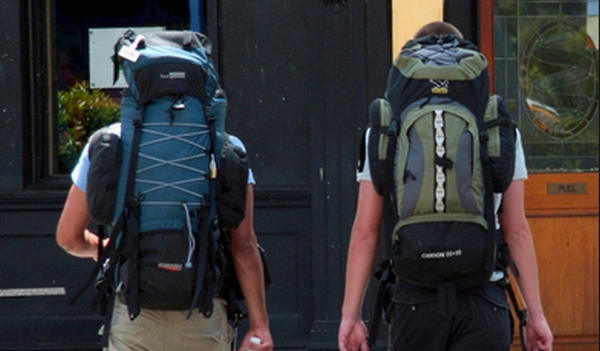
backpackersSecurity While Traveling – How to Stay Safe

Luggage – Ensure that luggage is locked. You can be not only robbed, but something could be planted in your luggage if it is left open, especially when crossing borders. When flying in the US, your luggage may be opened for a security check, so you may want to leave unlocked in that country.

Pickpockets – Wear a money belt; waistband ones are best. Do not wear good jewellery.  Also, better to not walk around with fancy electronics as you may be inviting a thief. Take taxis at night.

Distraction Theft – Someone distracts you while an accomplice picks your pocket. For example, kids swarm around you asking for money, or someone “accidentally” spills something on you.

Valuables – Keep all valuables in a safe, if you can, or locked in your room.

ATMs – Be aware of your surroundings when using an ATM.  Best to have a companion with you to keep an eye out and prevent someone from spotting your pin. Do not let a stranger “help” you.

Taxi Tricks

  • When you hop in a cab and ask to go to a specific restaurant, hotel, or shop, the driver tells you it’s “closed” but offers to take you to a “better” one.
  • When arriving in a new city, pre-arrange for a taxi pickup, or check if you can arrange for a taxi from within the airport terminal.
  • Be sure to know the rate before you get in a taxi and even if there is a meter, keep an eye on it. Taxis have been known to have the rate double or even multiply by 10 times. If in doubt, don’t pay until you have checked with someone at your destination.
  • Pay attention to the direction you are going. Some drivers will take you out of the way and drive in a big circle to increase the fare.

Fake friends

  • At the airport, someone can pick up your luggage and carry it for you to their car. They may not be legitimate taxi drivers.
  • At a bar or restaurant, you get stuck with the bill.
  • The Fake Gift – A vendor or stranger bestows a gift upon you. Then, after you have it, they demand payment, perhaps even threatening to call police.

Money/donations – Do not give money to children. It encourages them to beg and stay out of school. Rather, give a donation to a charity in the area. Do not give money to anyone unnecessarily.


Filed Under: Featured, Blog

Visit Kenya

August 1, 2014 By Cynthia Holmes

visit KenyaWhy visit Kenya? The thought of Kenya conjures up many romantic ideals – Hemingway on safari, Karen Blixen and her farm, the nomadic Masai tribes people, or hot-air balloon rides over the Masai Mara during the Great Migration.  It is a land of stunning scenery, mountains and plains, beautiful Mount Kenya, the Rift Valley, soda lakes and numerous National Parks and Reserves. The Masai Mara National Reserve is the most prolific game park in Africa, especially during the Great Migration when 2 million animals migrate from the Serengeti in Tanzania. Imagine the thrill of seeking out the big five – elephant, rhino, buffalo, leopard and lions. Here, the Huffington Post articulates 19 reasons why a person would want to add Kenya to a bucket list. http://www.huffingtonpost.com/claire-gallam/22-photos-thatll-make-you_b_5629608.html

Filed Under: Featured, Blog

  • « Previous Page
  • 1
  • …
  • 6
  • 7
  • 8
  • 9
  • 10
  • Next Page »
Have questions or can’t find what you are looking for? We’re happy to help. Ask your question below.

    Your Name (required)

    Your Email (required)

    Subject

    [your-subject]

    Your Message

    Please Enter Code
    captcha  

    Your Tour Guide

    Cynthia Holmes
    Traveller / Owner
    Send an Email
    Tel: 1 (604) 685-0555

    Recent Posts

    • Why Travelers Are Flocking To Africa
    • Lose Yourself At Lewa Conservancy, Kenya
    • Chitwan National Park
    • Visit Alicante Spain
    • Need To Know To Book A Safari
    • Covid 19 Safety Protocols
    • Offset Carbon When Travelling
    • Sitemap
    • Contact
    • Booking Conditions
    • BenefacTours FAQ
    • Privacy Policy

    Copyright © 2026 BenefacTours Inc. 1489 Harold Rd. North Vancouver, BC, V7J 1X2 Canada

    Telephone Local: 1-604-685-0555 Toll Free Canada: 1-877-687-0555 Skype: benefactours

    Hours: Monday – Friday 8 am – 5 pm PST, Saturday 9 am – 4 pm PST